Creative NonFiction: The Dream

Intro: In 2015, I wrote down a dream, which I rarely do. Usually they fade minutes after waking up, but this one stayed with me. Dreams are as real as the reality we share, so I consider this creative nonfiction.

The Dream; March 2015

I detest the color orange. Long ago, Mom had painted the kitchen bright orange and pale yellow. We sat together at the breakfast table. Everything was “nice” until the electrical storm. The lights went out. Again. I looked out the window at the muddy grey landscape and wondered, “For how long?”

Mom started pulling empty jars out of the recycling bag and putting them into the lazy susan. She was making another mess, and we needed order. I wrestled her to the ground. Lightning struck and sparks flew past the window. We screamed too loud to hear the thunder. I hugged her like a child and cried because she had lost her mind.


I was in my old blue car driving up the hill when the lights went out again. The town went pitch black. The lights on the dashboard were all I could see. I pressed the gas pedal down, but the car was stuck. I lifted the door handle, but the door wouldn’t open. I couldn’t unlock the lock and I was trapped. The humidity inside began to force me down into my seat. The pressure was building as if invisible hands were pressing down on my chest. It was smothering me, and I couldn’t fight it.

I think I passed out, but I was uncertain. When I woke up, I was lying on the front lawn of our house, and the blue car was parked in the driveway. The sun was rising in the west as I wiped the drool off the side of my chin.


I went outside through the side door. It was minutes before dusk, and I looked up at the soft greyish blue sky. It’s my favorite time when the sky looks depressed. The planets were visible; translucent pastel orbs lined up in a neat row. I held my hand in front of my face and pretended that Jupiter was resting on my palm. It was strange. They were too close to Earth. My neighbors drifted out of their homes, and my sister joined us. In unison, they pointed and stared at the sky. But I sensed something wrong. All the planets were in alignment except Earth. I ran for the side door, grabbing the doorknob. The ground started to contract and expand. The movement increased as the Earth began to breathe on its own.

People lost their footing. Shouting, they were flung into the air, glided across the sky, then fell away from the Earth. Gravity had stopped working. I held tight to the doorknob as my sister grabbed for me. She caught my free hand by two fingers as the ground shook the bones in my body. I needed two hands to open the door. Her gaze was nervous as her eyes widened. She shouted, “Please don’t…”

I let go. Using both hands, I pulled myself into the house. In the kitchen, Mom was trying to open a window. I hurried to stop her, and our fingertips touched. Abruptly, our bodies were pinned flat to the ceiling, surrounded by broken glasses and dirty dishes, as the earth plummeted from its orbit. The freefall held my face firmly against the door of the orange cabinet. I wish I had stayed outside.

My thoughts on writing with AI

Vintage typewriter with text

To err is human, to write is AI.

There’s a divisive split in the writing world on using AI. On one side, writers are concerned that AI will replace them. On the other hand, novices are convinced AI will magically write their bestseller in an hour. Both groups are wrong.

As a ghostwriter, I have used many AI writing apps such as Sudowrite, Novel AI, and Novelcrafter at my clients’ requests. The same clients want complex characters, original stories, and plot points that will hook readers. They also want to write eBooks quickly and efficiently. Well, AI is not a magic wand; it’s a tool. A frustrating, verbose mess of a tool. It reminds me of the fairy knots I get in my hair. Impossible tangles that I can’t ease out with my fingers, and in the end, I have to cut them out. My experience is the same with AI. I try to ease out the bad prose with my keyboard, but in the end, I end up cutting it out.  

When I use AI, I write a detailed outline first to aim for the rough draft I want. The outline has to be detailed in every aspect and nothing is left to chance. And it often has to be repeated because AI has a limited memory. It will cheerfully offer to help, and then a paragraph later make something up because it doesn’t remember what it was asked. It is confidently incorrect. It would be a fun mad-lib experiment to work with the random content if I didn’t have a deadline. 

Using AI is like drawing in a coloring book. I draw the outline, and AI colors it in. If I don’t prompt it, it will scribble all over my drawing in a big black Sharpie. It’s like writing a story with a quill and having an editor review it with crayon. 

Is it all bad? No. But it has limits. I ghostwrite romance that will hit the bestseller chart for a few weeks, never to return. My personal goal is to write my own novel that will have a longer shelf life than a month. Would I use AI for my personal projects? Yes. Grammarly is AI, editing in MS Word is AI, Google Docs is AI. So many people have used it for decades. The difference is in assisting with content and generating it.  

AI won’t write a good book. Not the way a writer would want it. It hallucinates, repeats, loses threads, and has no real understanding of characters’ emotional arcs. How can it describe feelings when it’s never had one? 

But I would encourage commercial writers to experiment with AI even if you don’t plan to publish the results. A concern I have is not knowing AI will lead to more problems for writers, not fewer. Not knowing how to utilize it will make a working writer less competitive than those that do. Clients still want a writer’s creativity, but they also want AI’s speed. AI is useful for grunt work that can take hours to research. I’ve used it to describe landscapes of places I’ve never been but my characters have.

If one knows how to prompt, steer, and revise AI, there are some positives when getting it done matters more than perfection. Besides, AI isn’t going away. Think of it as an overeager intern that you have to patiently explain what to do. Can I do it myself faster? Maybe, but with AI, I’ll never have writer’s block again. 

I have a Claude subscription and use it to do a lot of smaller tasks, especially write email. It helps build my confidence even if it’s only proofreading an email to building management for a pool pass. According to Claude, I am a genius at everything I do. It’s the stage mother I never had in life. It gives me a blue ribbon when I finish last, and in return, I’m teaching it sarcasm. 

Working in commercial fiction, I will continue to learn how to wrangle AI. I like fiddling around with tech, and it’s a new toy. But for my own work, I am setting up an old laptop that will never go online. On the plus side, AI has made me proud of my mistakes because every typo is proof that a human wrote it.

Writing Prompt # 1

A teenager wants to be a witch and practices solitary spells in the woods. Nothing happens in her world, but in another dimension, she is making a mess – plague, famine, floods, and pestilence. A skilled warrior is dispatched to kill her. In order to escape him, she casts a vanishing spell. To her amazement, the spell works. But before she can disappear into thin air, the warrior grabs her by the ankle. They both wake up in a wheat field on planet Earth.

Now what?

  Woman in wheat field. Photo by dezphoto/Depositphotos

Billingsgate Lane

your inner child awaits

You answer the front door of your suburban home. Your inner child is on the doorstep screaming for your attention. The neighbors are watching, so you yank the hysterical child by the arm into the house. You offer it anything and everything to stop its howling.

You raise your voice over the racket. “What do you want?”

“You know what I want!” your inner child screams. Then it kicks you in the shin, runs into the bathroom and locks the door. What to do?

Settle for Effort

The lure of instant gratification


I’m a fan of the artwork of Jenny Holzer and the subreddit fake album cover art. So be patient with me as I post 960 x 960 graphics on my site. Thanks for reading.

Inspirational Curios: Pronounced ‘sow-in’

Happy Halloween. Autumn is my favorite season, and I enjoy watching this clip of Melissa Joan Hart every year. It keeps me grounded. Remember the reason for the season. Be respectful and stay safe.

And Día de los Muertos is not a decorative theme. But we already know that.


CUP

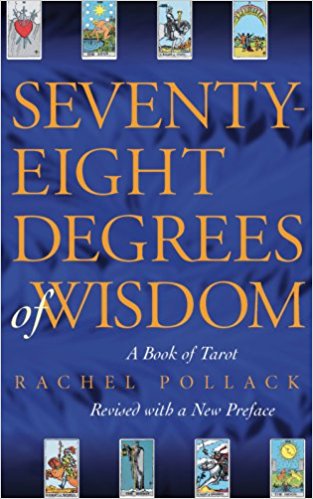
Mini Book Review #2: ‘Seventy-Eight Degrees of Wisdom’

51Taa5Vl3FL._SX311_BO1,204,203,200_

Review: Seventy-Eight Degrees of Wisdom by Rachel Pollack.

On a scale of ‘Buy it, Borrow It or Burn it.’ I recommend: Buy It. This is the only book you’ll ever need for tarot. Well, maybe one of two.

Divination is not the only reason to read tarot cards. It helps me avoid writer’s block. Reading the cards is essentially telling a story; a story that at one time had an oral tradition. Tarot is an illustrated version of the ‘hero’s journey.’ Rachel Pollack’s book discusses useful interpretations of the cards. It’s not a bullet list posted on social media that allow the querent the ability to choose the one description they like best. Her explanations detail the meaning of the cards based on history, imagery, and symbolism.

My preferred method for reading the cards is a three card layout. Three cards in a row – the ‘first’ is the past, the ‘second’ is the present, and the ‘third’ is the future. If one is reading the cards truthfully, they will recognize their past and their present. The future outcome, if one remains on their current path, should be apparent. After I read the individual cards, I look at them as a whole like a panoramic view. I look for the similarities in the cards, which may allude to a larger meaning.

The world is full of symbols and messages, and our ancestors knew how to read them. You may want to pause and take a look.


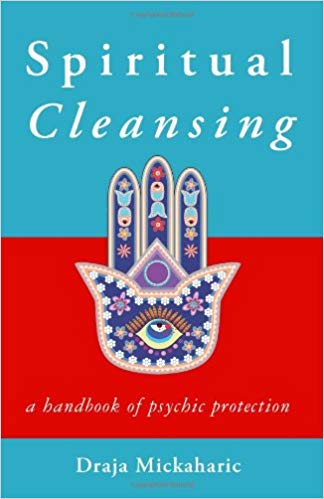
Mini Book Review #1: Spiritual Cleansing

41ZAVxIzNLL._SX322_BO1,204,203,200_

Mini Book Review #1: Spiritual Cleansing – A Handbook of Psychic Protection by Draja Mickaharic.

On a scale of ‘Buy it, Borrow It or Burn it’. I recommend: Buy it. The book is a classic and informative. It’s not the ‘cut and paste’ advice posted on random websites.

It’s important to know how to cleanse your body, your spirit, and your surroundings. Most people know how to bathe their body and de-clutter their homes, but they neglect the spirit. The cures in this book are easy to do. The supplies are inexpensive and can be purchased at any supermarket or drugstore. It works, but your intent must be strong. The beer bath rid me of the evil eye. My dull and constant headache finally disappeared.

And if you dabble (or hunt for ghosts this month), read this book first. Better yet, don’t go looking for trouble because trouble will find you.


Blog at WordPress.com.

Up ↑